
HARQ
HARQ IoT mobile app
About
Using Sense technology, create a mobile app proof of concept that talks to your house to help you better manage energy usage
Role
Lead UX Designer
Skills
Wireframes and high-fidelity mockups, establish requirements, usability testing

Problem
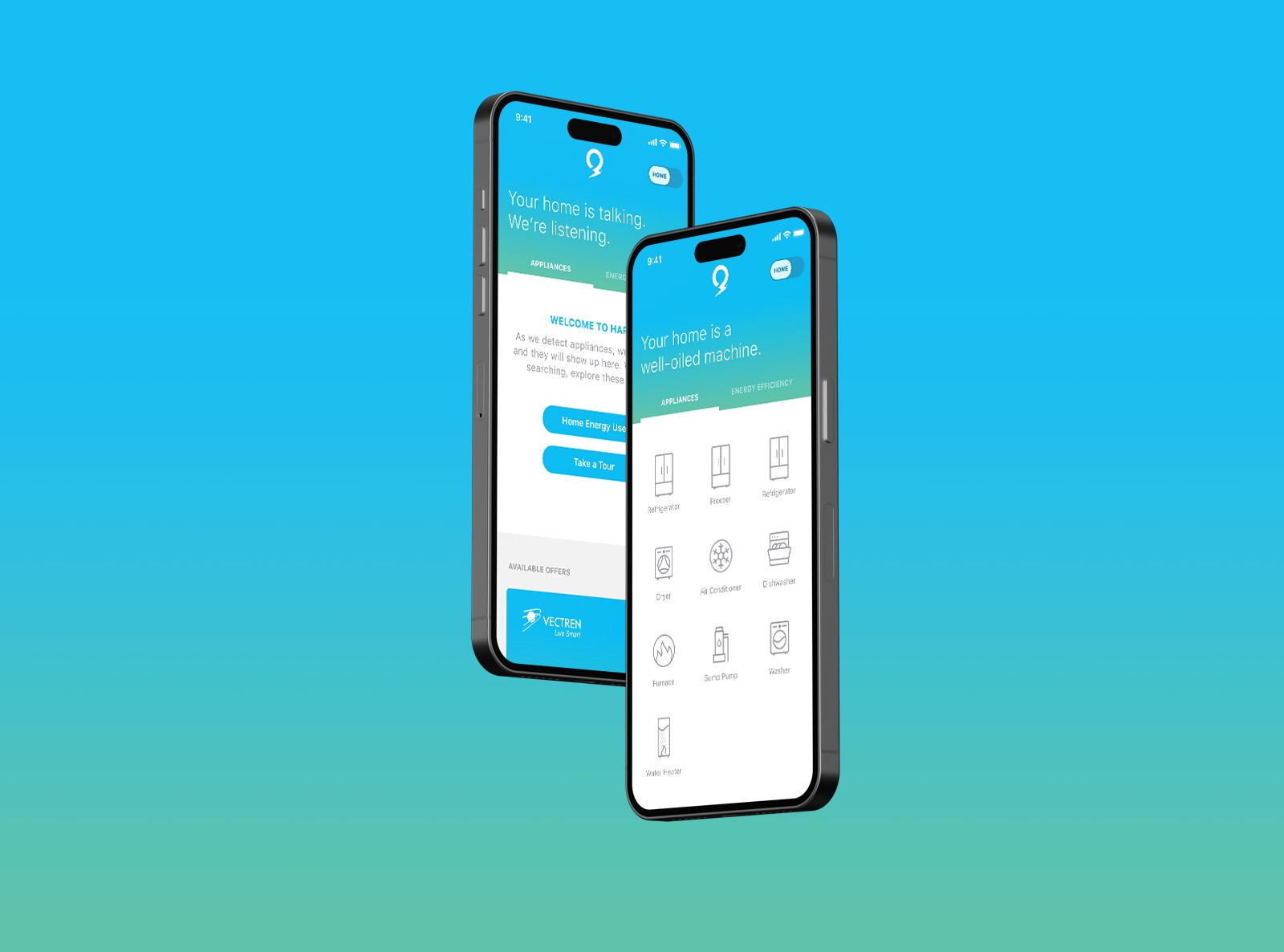
Utility customers have no visibility into their energy use until the bill arrives. By then, the cause of a spike — a failing appliance, a phantom load, an inefficient habit — is long past and hard to diagnose. Our client, a regional utility company, wanted to explore whether a mobile app could shift that relationship from reactive billing to proactive home intelligence.
Solution
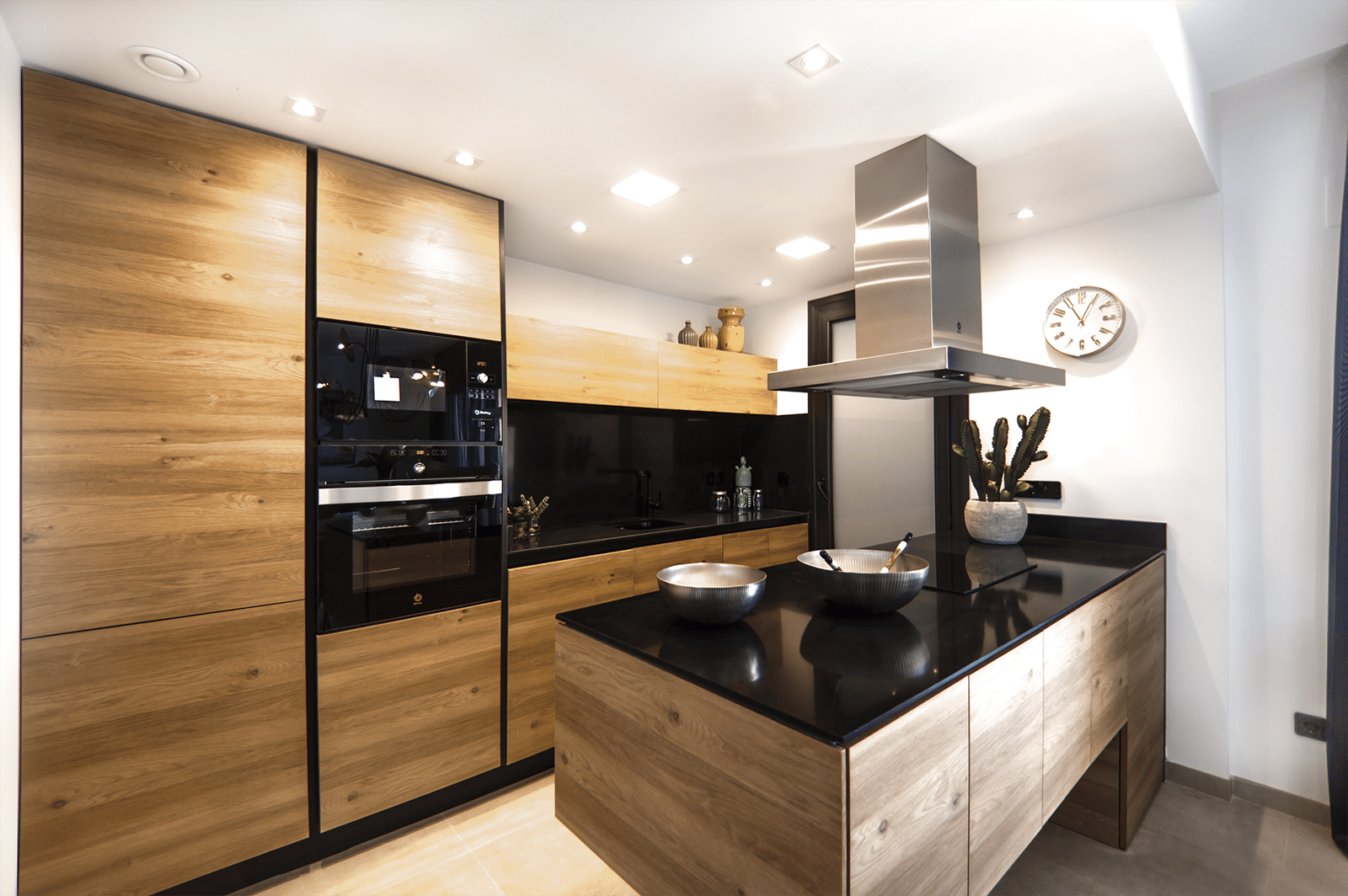
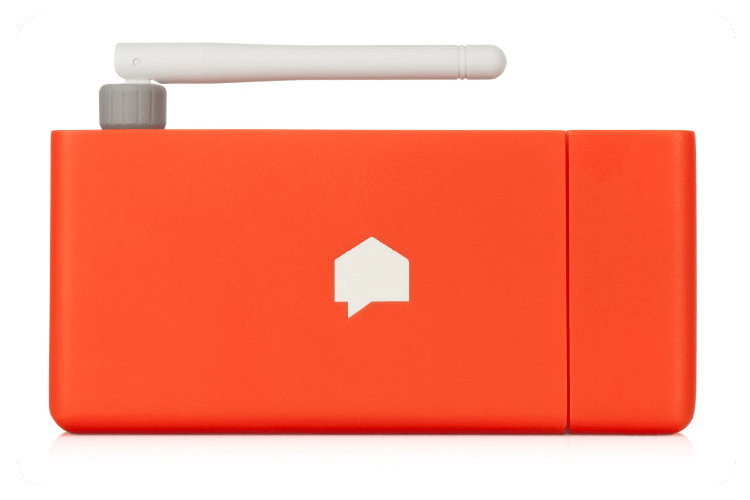
We designed Harq, a mobile application built using Sense technology — an energy intelligence platform that installs directly into a home's electrical panel and uses machine learning to deliver real-time, appliance-level insights. Sense identifies individual devices by analyzing their unique electrical signatures, giving homeowners granular visibility that a standard utility meter simply can't provide.
To ground the design in real behavior, we installed Sense units in several homes throughout the design process — giving us live data that directly shaped Harq's information architecture and alert logic. Wireframe prototypes were evaluated through formal usability studies.
solution
Every appliance, every alert
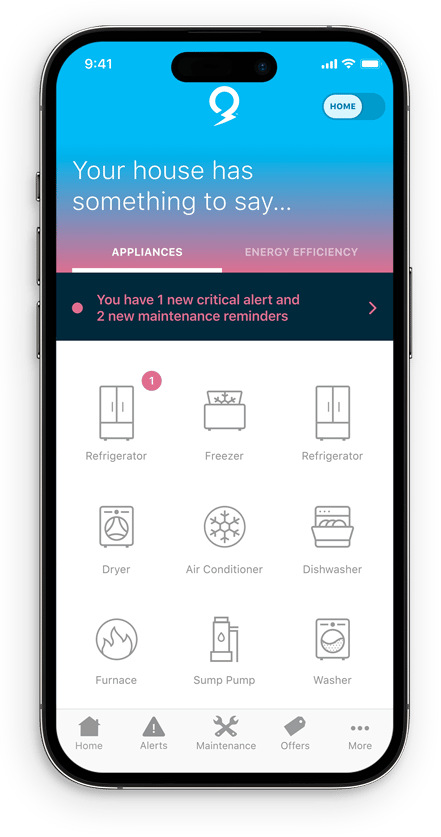
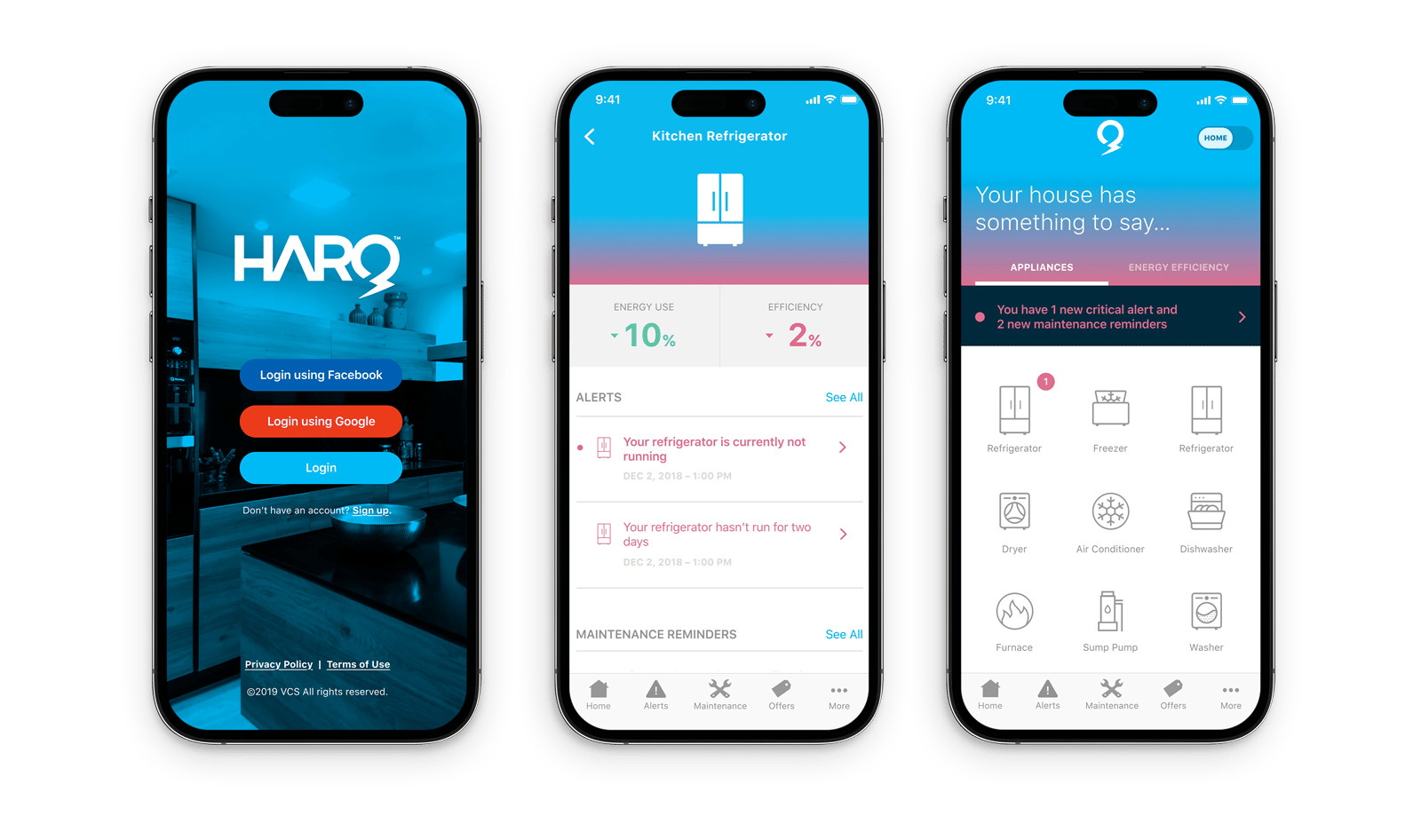
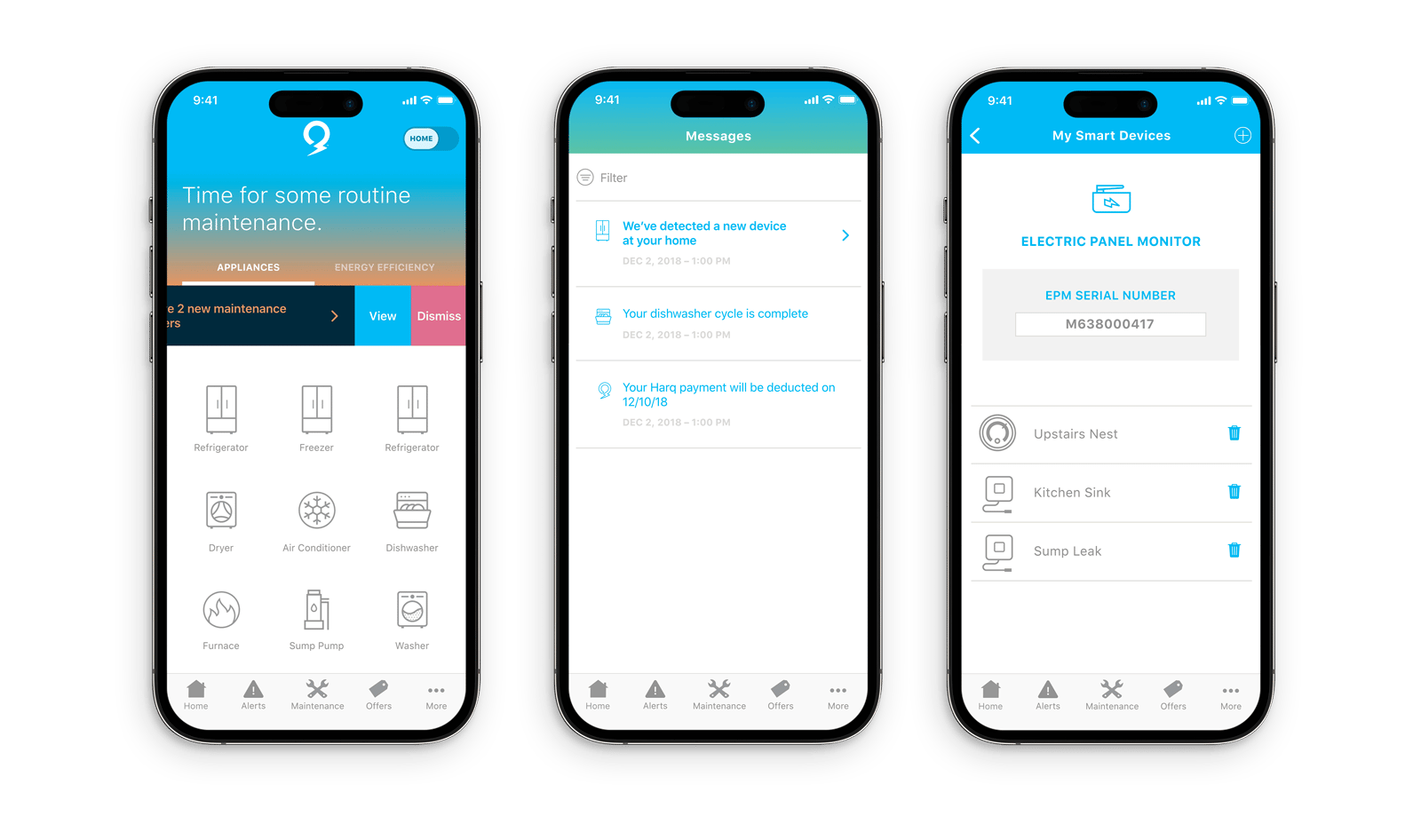
Harq automatically detected appliances and surfaced them in a clean dashboard where users could track real-time energy usage, view historical consumption charts per device, and receive alerts when an appliance's signature changed in ways that might indicate wear or early failure. Harq also integrated with leak detectors, giving homeowners a single place to monitor both energy and water safety.
The outcome
Usability research validated the core concept while surfacing clear priorities for future development. Users embraced automatic appliance detection but expected devices to feel personalized — a refrigerator auto-labeled by the system needed to feel like their refrigerator before they'd trust it. Energy charts needed contextual benchmarks to be meaningful, and alert design emerged as the highest-stakes challenge, with false positives being the primary concern. The combination of energy monitoring and leak detection landed well, with users naturally framing it as a single "home health" app.
Harq concluded at the wireframe and usability study phase. The concept proved technically feasible and resonant with users — the foundational question for the utility company became not whether Harq could be built, but whether the organization was ready to own what it built.

Brad Wolf | Consultant Portfolio
HARQ
HARQ IoT mobile app
About
Using Sense technology, create a mobile app proof of concept that talks to your house to help you better manage energy usage
Role
Lead UX Designer
Skills
Wireframes and high-fidelity mockups, establish requirements, usability testing

Problem
Utility customers have no visibility into their energy use until the bill arrives. By then, the cause of a spike — a failing appliance, a phantom load, an inefficient habit — is long past and hard to diagnose. Our client, a regional utility company, wanted to explore whether a mobile app could shift that relationship from reactive billing to proactive home intelligence.
Solution
We designed Harq, a mobile application built using Sense technology — an energy intelligence platform that installs directly into a home's electrical panel and uses machine learning to deliver real-time, appliance-level insights. Sense identifies individual devices by analyzing their unique electrical signatures, giving homeowners granular visibility that a standard utility meter simply can't provide.
To ground the design in real behavior, we installed Sense units in several homes throughout the design process — giving us live data that directly shaped Harq's information architecture and alert logic. Wireframe prototypes were evaluated through formal usability studies.
solution
Every appliance, every alert
Harq automatically detected appliances and surfaced them in a clean dashboard where users could track real-time energy usage, view historical consumption charts per device, and receive alerts when an appliance's signature changed in ways that might indicate wear or early failure. Harq also integrated with leak detectors, giving homeowners a single place to monitor both energy and water safety.
The outcome
Usability research validated the core concept while surfacing clear priorities for future development. Users embraced automatic appliance detection but expected devices to feel personalized — a refrigerator auto-labeled by the system needed to feel like their refrigerator before they'd trust it. Energy charts needed contextual benchmarks to be meaningful, and alert design emerged as the highest-stakes challenge, with false positives being the primary concern. The combination of energy monitoring and leak detection landed well, with users naturally framing it as a single "home health" app.
Harq concluded at the wireframe and usability study phase. The concept proved technically feasible and resonant with users — the foundational question for the utility company became not whether Harq could be built, but whether the organization was ready to own what it built.
Brad Wolf | Consultant Portfolio
HARQ
HARQ IoT mobile app
About
Using Sense technology, create a mobile app proof of concept that talks to your house to help you better manage energy usage
Role
Lead UX Designer
Skills
Wireframes and high-fidelity mockups, establish requirements, usability testing

Problem
Utility customers have no visibility into their energy use until the bill arrives. By then, the cause of a spike — a failing appliance, a phantom load, an inefficient habit — is long past and hard to diagnose. Our client, a regional utility company, wanted to explore whether a mobile app could shift that relationship from reactive billing to proactive home intelligence.
Solution
We designed Harq, a mobile application built using Sense technology — an energy intelligence platform that installs directly into a home's electrical panel and uses machine learning to deliver real-time, appliance-level insights. Sense identifies individual devices by analyzing their unique electrical signatures, giving homeowners granular visibility that a standard utility meter simply can't provide.
To ground the design in real behavior, we installed Sense units in several homes throughout the design process — giving us live data that directly shaped Harq's information architecture and alert logic. Wireframe prototypes were evaluated through formal usability studies.
solution
Every appliance, every alert
Harq automatically detected appliances and surfaced them in a clean dashboard where users could track real-time energy usage, view historical consumption charts per device, and receive alerts when an appliance's signature changed in ways that might indicate wear or early failure. Harq also integrated with leak detectors, giving homeowners a single place to monitor both energy and water safety.
The outcome
Usability research validated the core concept while surfacing clear priorities for future development. Users embraced automatic appliance detection but expected devices to feel personalized — a refrigerator auto-labeled by the system needed to feel like their refrigerator before they'd trust it. Energy charts needed contextual benchmarks to be meaningful, and alert design emerged as the highest-stakes challenge, with false positives being the primary concern. The combination of energy monitoring and leak detection landed well, with users naturally framing it as a single "home health" app.
Harq concluded at the wireframe and usability study phase. The concept proved technically feasible and resonant with users — the foundational question for the utility company became not whether Harq could be built, but whether the organization was ready to own what it built.